- Green Rising
- Posts
- The biggest climate threat to humans on the continent is medical
The biggest climate threat to humans on the continent is medical
And the single biggest remedy is a focus on manufacturing pharmaceuticals in Africa. Which is now happening

Welcome to Green Rising – Far too few make the connection between the climate changing around us and the health impact of that on us.
It’s rather obvious when you think about it. Vectors of disease, drug supply chains and adequate nutrition are all impacted by weather and “natural” disasters.
Until now, Africa has been dependent on unreliable remedies – pharmaceuticals are mostly imported rather than made close by. That has exacerbated disasters in the past.
With climate disruptions now looming, new efforts are taking shape to bring drug manufacture onshore. We look at specifics.
 | African governments have set a target to meet 60% of health-product demand through local manufacturing by 2040. The declaration was adopted during the African Union’s 39th Summit in Ethiopia. While this sounds like a medical-industrial turning point, reaching the target will require solving major operational challenges. |
A key focus of the declaration is creating predictable demand for manufacturers through pooled procurement and long-term offtake arrangements.
However, to scale, local pharmaceutical companies need financing, regulatory approvals, quality checks, clinical trials and reliable cross-border logistics and sales.
Our take: The AU declaration is great. But all the hard work is yet to be done…Read more (2 min)
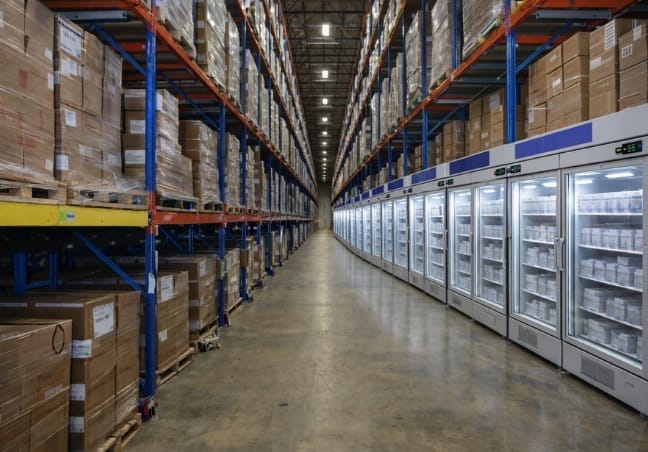 | Africa is no longer fully dependent on global medical stockpiles for emergency responses, following the launch of Africa’s first medical warehouse by the Africa CDC in Ethiopia. The continental health agency now has physical infrastructure to procure and deploy critical medical supplies directly when countries need them. |
Global stockpiles have repeatedly failed African countries during crises. Cholera vaccines are the most recent example. Since 2022, some African countries have not been able to run preventive campaigns because the global stockpile, based in South Korea, was empty.
Centralised warehousing gives African pharmaceutical manufacturers clearer demand visibility and faster procurement cycles. It also enables the Africa CDC to prioritise inventory from local producers.
Our take: Local manufacturing has been a policy talking point by global health partners for years. Africa’s first medical warehouse is a step in that direction…Read more (2 min)
 | The Africa CDC has launched a Central Data Repository (CDR) to consolidate public health data across the continent. The platform integrates surveillance and laboratory information. This enables manufacturers to forecast demand for medical products more accurately and align production schedules with emerging public health needs. |
Fragmented public health data limited manufacturers and suppliers to anticipate demand, leading to overproduction or stock-outs.
The CDR, funded by the Global Fund and supported by the Public Health Informatics Institute, supports more accurate production planning and distribution of medical supplies.
Our take: A central data system is an enabling intervention for local pharma manufacturing but a lot of investment is still needed.…Read more (2 min)
Number of the week

… is Africa’s total newly launched waste-to-energy (WtE) capacity, thanks to new plants in Nigeria and Uganda. These join Ethiopia's massive (but underperforming) Reppie plant at 90 GWh; Ivory Coast's 76 MW Divo Biomass Project, Sierra Leone's planned 30 MW, and Johannesburg's targeted 28 MW.
Network corner
Top green jobs from…
Sistema.bio: E&S Senior Manager (Kenya)
M-KOPA: Senior Growth Marketing Manager (Uganda)
Sun King: Area Business Manager (Malawi)
Conservation Intl: People Data & Compliance Manager (South Africa)
BURN Manufacturing: Senior HR Officer (Nigeria)
World Resources Institute: Senior Data Analyst (Rwanda)
Power for All: Data Engineer (Madagascar)
IUCN: Project Coordinator - JILMI ( Côte d'Ivoire)
Aptiv: HR Development Coordinator (Morocco)
Reply