- Green Rising
- Posts
- Want to see what a power-rich Africa looks like?
Want to see what a power-rich Africa looks like?
After years of investment in renewables, a more sustainable energy sector is starting to emerge

Welcome to Green Rising – We’re not big fans of cheerleading. It lacks rigour. Spontaneous applause tends to be undifferentiated. So instead please understand what we’re reporting today as recognition of a trend long in the making. Africa’s clean energy reality has shifted for good.
A lack of electricity is one of the perpetual tropes about the continent. In quite a few places it is still true, even if the reasons for it have shifted. But in a growing number of countries the underlying energy infrastructure has undergone fundamental change – to a new state where power is not just more abundant and dependable but also renewable.
Millions of Africans remain off-grid. And the likelihood of them being connected has only increased marginally. Changing that remains an important goal. But the connection they will receive eventually won’t most likely be run by a public utility using fossil fuel.
 | State-owned utility Ethiopian Electric Power has more than doubled its installed capacity from 4,462 MW to 9,752 MW in under a decade. Fast growth has been achieved through renewables, mainly hydropower, which accounts for about 90% of the country’s installed capacity. It has also increased electricity access by around 10%. |
The key driver of growth is the 5 GW Grand Ethiopian Renaissance Dam (GERD), now Africa’s largest hydropower plant. The country is focusing on positioning itself as a regional power hub and has made this a central pillar of its energy strategy.
This follows the utility’s announcement earlier this year that it has returned to profitability, driven by rising exports and increased sales to private domestic offtakers after the commissioning of the GERD.
Our take: With neighbouring countries facing power deficits, Ethiopia should expand cross-border trade to secure demand and monetise its surplus… Read more (2 min)
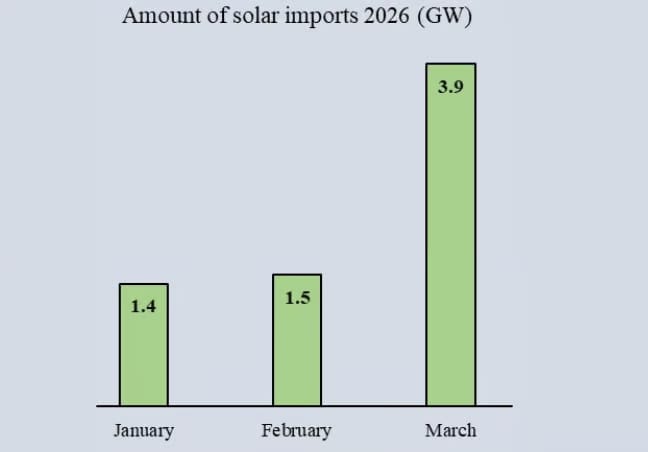 | African countries imported a record 3.9 GW of solar panels in March this year, marking the highest monthly import volume ever recorded from China. This was 1 GW higher than the combined imports for January and February, and came despite a marginal $0.01 per watt price increase between February and March. 12 countries imported more than 100 MW. |
The surge was likely driven by the rush to secure imports before China’s policy of ending VAT rebates for solar took effect in April, as well as fuel supply disruptions linked to the US-Israel-Iran conflict.
South Africa led imports with 609 MW, followed by the DR Congo at 551 MW and Nigeria at 439 MW. DR Congo imported 879 MW in Q1 this year and is only 307 MW away from surpassing its total imports for 2025.
Our take: Countries importing large volumes of panels will need supportive policies and faster permitting to avoid delays in deployment… Read more (2 min)
 | South Africa's utility Eskom reports having surplus power, an unfamiliar problem after years of chronic “load shedding”. This creates a new challenge for the company, which invested heavily over the past two years to meet rising demand, only for many of its customers to move away from the grid, putting pressure on its business model. |
The utility is now focused on ensuring its surplus power is used, exploring new demand sources such as bitcoin mining, data centres and the fast-growing electric-vehicle charging market.
Eskom has already offered discounted tariffs to large industrial users to keep them on the grid. It is also targeting property owners with tailored tariff deals.
Our take: Eskom must reposition itself as a service provider rather than solely an electricity seller.… Read more (2 min)
Number of the week
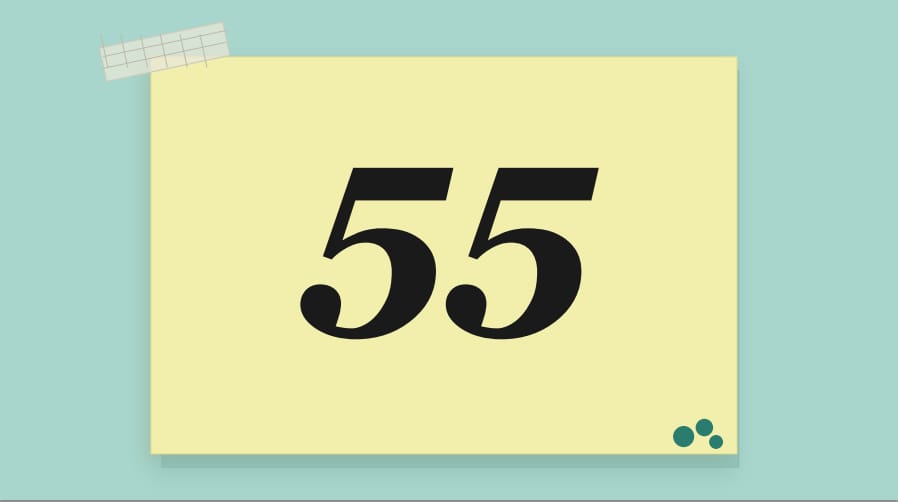
… is the number of public EV charging stations utility Eskom plans to build in South Africa by the end of 2027. Charging operators oppose utilities entering the market. Kenya Power and Ethiopian Electric Power also build chargers. Utilities leverage grid ownership to enable faster, cheaper upgrades than private competitors.
Network corner
👉 Dr Olugbenga Adebola was inducted as Grand Patron of CityScope Africa for circular economy, waste management and sustainable development initiatives
Top green jobs from…
GGGI: Senior Program Officer Green Investment (Côte d'Ivoire)
M-KOPA: Head of Tax- West Africa (Ghana)
Globeleq: Finance Manager (Zambia)
BURN Manufacturing: Field Operations Manager (Tanzania)
World Agroforestry: Field Coordinator (Mali)
Trees for the Future: Procurement Coordinator (Tanzania)
ZUTARI: Renewables Energy Engineer (Kenya)
Scatec Solar: HV Secondary Plant Engineer (Egypt)
Conservation Int’l Ventures: Finance and Accounting Coordinator (Madagascar)
Sun King: Regional Mentor (South Africa)
Reply