- Green Rising
- Posts
- What ails the green economy isn’t what you think
What ails the green economy isn’t what you think
And that’s a good thing. Green sectors struggle most with business problems, not politics

Welcome to Green Rising – We all follow the ugly debates about climate right or wrong. But here is why they’re less important than it sometimes feels...
When we look at what sustainable businesses in Africa actually struggle with, it has little to do with Donald Trump. They are businesses and have to cope with particular business issues. Every one of them has their own struggles.
This week we look at several. Does that sound depressing? Shouldn’t be. Think of it as a celebration that thousands of African companies are engaged in solving sustainability issues – rather than just talking about it.
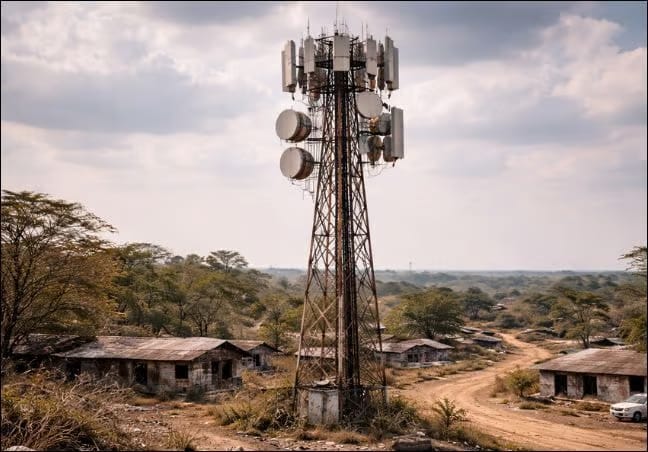 | FNB Connect, the mobile arm of South Africa’s First National Bank, this week announced it is replacing plastic SIM cards with biodegradable alternatives, highlighting an emerging waste dimension of Africa’s digital expansion. As mobile access grows, millions of SIM cards and other telecom components enter waste streams outside formal recovery systems. |
The region’s telecom boom is accelerating, with mobile subscriber penetration in Sub-Saharan Africa projected to reach 50%, or 750 million users, by 2030, reshaping the sector’s material use and waste generation.
While consumer items such as SIM cards and phones often represent the visible face of telecom waste, they are only a fraction of the total.
Our take: Addressing telecom waste requires collaboration among stakeholders… Read more (2 min)
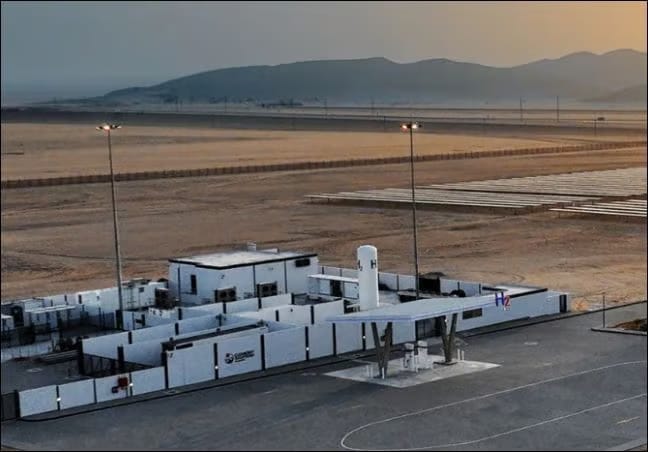 | An Egyptian 100 MW green hydrogen project began exporting to Europe and the US last month, becoming one of three African initiatives to reach production. While a milestone, most projects remain stalled, with a recent Energy Industries Council report citing missing offtake agreements as a critical barrier to the continent’s ambitions. |
Offtake agreements commit buyers to purchasing green hydrogen, providing producers with revenue certainty to secure financing and ensure stable returns.
Without such agreements, capital-intensive hydrogen projects stall, as investors are unwilling to commit funding without clear buyers, leaving many announced projects unfinished.
Our take: Western sentiment to shift “from aid to trade” is fine. But then we need actual trade….. Read more (2 min)
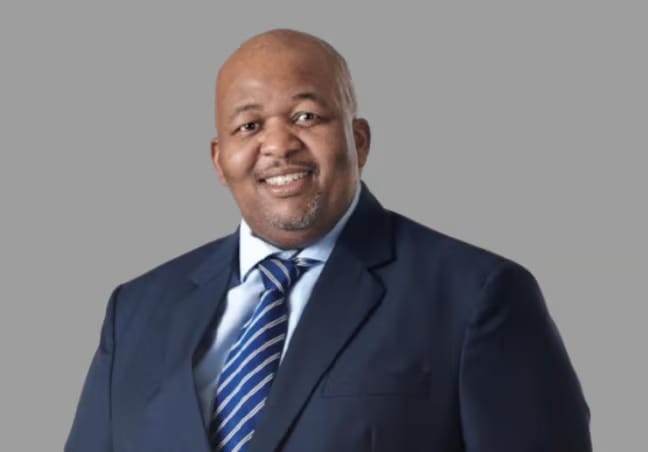 | Africa’s largest utility, Eskom, is facing a crisis as South African electricity demand fell by 11% in January 2026 compared to a year earlier. The decline has exposed weaknesses in its business model, which is increasingly exposed as income must be earned from a shrinking customer base, risking higher prices. |
Renewable energy options have accelerated a shift towards self-generation, while the closure of energy-intensive dirty industries such as coal has permanently reduced baseload demand.
In response, old-school Eskom has granted a reduced tariff to a major customer and – through its renewable subsidiary – plans to pursue direct agreements with others to protect its revenues.
Our take: Carbon pressure will accelerate the shift to renewable self-generation… Read more (2 min)
Number of the week

… is the estimated number of Africans who are members of savings & credit cooperatives. These “saccos” are starting to lend money for the purchase of electric vehicles. In Kenya, saccos have seven million members and an annual lending volume of $3.5 billion. One Kenyan sacco is offering electric motorbike loans with a $271 deposit and a $2.5 daily repayment.
Network corner
👉 Makerere University launched a 36-month programme called SUNRISE (Sustainable Universities for Renewable Innovation in Solar Energy)
Top green jobs from…
Conservation Intl Ventures: Carbon Finance Origination & Deal Lead (South Africa)
d.light: Head of Operations (Nigeria)
BURN Manufacturing: Relations, Policy & Partnerships Lead (Mozambique)
IUCN: Senior Programme Officer- Resource Management (Kenya)
M-KOPA: Senior Analytics Manager (Ghana)
Scatec Solar: Grid HV Project Manager (Egypt)
Aptiv: HV Senior Process Engineer (Morocco)
One Acre Fund: Data and Systems Lead (Uganda)
Sun King: Regional Business Manager (Tanzania)
Baker Hughes: Emerging Talent- Field Engineer (Cameroon)
Reply